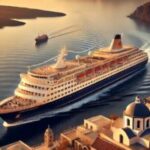
The Silver Endeavour
Why Getting There Is the Hardest Part of an Antarctica Expedition Cruise
For many travelers, an Antarctica expedition cruise sits at the very top of the bucket list.
It’s the last continent. The White Continent. A place of towering icebergs, cathedral-sized glaciers, breaching whales, and penguins that seem entirely indifferent to your presence. It represents remoteness in its purest form — the feeling of going somewhere few people on Earth will ever stand.
That sense of standing at the bottom of the world is exactly what makes Antarctica so compelling.
But here’s what most travelers don’t realize:
The hardest part of Antarctica isn’t the ice.
It’s getting there.
And it’s precisely this challenge that Silversea has set out to solve.
 The Hidden Friction No One Talks About

When people imagine Antarctica, they picture zodiac landings and shimmering blue ice. What they don’t picture is airport transfers, congested ports, weather-exposed piers, and logistical chokepoints.
For decades, most expedition cruises have departed from Ushuaia, Argentina — a fascinating gateway city at the southern tip of South America. But in recent seasons, Ushuaia has experienced record ship calls and passenger surges. On heavy turnaround days, multiple ships may embark and disembark within tight windows, straining port operations and surface logistics.
Add to that the routing many travelers take through Buenos Aires. International arrivals typically land at Ezeiza (EZE), while domestic flights to Ushuaia depart from Aeroparque (AEP). That often means collecting bags, clearing immigration, transferring across the city — sometimes 60 to 90 minutes depending on traffic — and re-checking luggage before heading south.
It works. Thousands of guests do it every year.
But it’s not the seamless start most luxury travelers envision for a once-in-a-lifetime expedition.
There have also been periodic labor and aviation union disruptions that ripple through Argentina’s airports and ports. When weather windows already matter for Antarctica operations, additional uncertainty is something discerning travelers understandably prefer to minimize.
None of this diminishes the magic of Antarctica itself.
But it underscores something important: logistics matter.
The Drake Passage Conversation

Then there’s the Drake Passage.
For some travelers, crossing the Drake is part of the legend — a rite of passage into true expedition territory. For others, it’s the part that gives them pause.
The Drake can be calm. It can also be famously rough. A traditional round-trip crossing typically requires two sea days each way — four days total in open water — before even reaching Antarctica.
For guests with flexible schedules and a taste for ocean adventure, that may be perfectly acceptable. But for many travelers, especially those who prefer to maximize their time on the continent itself, spending several days in transit is not how they envision the journey.
That’s where fly-cruise options become meaningful.
Flying over the Drake shortens the overall itinerary, reduces exposure to unpredictable sea conditions, and allows more focused time in Antarctica’s landscapes. It doesn’t remove the adventure. It simply shifts the emphasis toward the destination rather than the transit.
Silversea’s Chile-Based Model: Santiago to Puerto Williams
Several years ago, Silversea made a strategic decision to move its Antarctica operations away from Argentina and invest instead in a Chile-based model centered on Santiago and Puerto Williams.
This shift was not cosmetic. It was operational.
Here’s what it means for travelers:
Guests fly into Santiago, a strong international hub with extensive long-haul connectivity. Instead of navigating public terminals for onward travel, they check in via a private aviation facility (FBO) for Silversea’s exclusive charter flight.
That charter flies directly to Puerto Williams — eliminating inter-airport transfers, public-terminal congestion, and much of the friction that can accompany traditional routings.
From Puerto Williams, transfers to the ship are streamlined and purpose-built for expedition departures.
In practical terms, that means fewer moving parts.
Puerto Williams also offers a slightly shorter sailing distance to Antarctica and operational advantages that can be helpful when managing tight weather windows. In expedition cruising, timing and flexibility are everything.
Why a Hotel at the Bottom of the World Matters

When Silversea announced it would build a purpose-designed hotel in the southernmost town on Earth, some travelers understandably wondered why.
The Cormorant at 55 South in Puerto Williams is designed as a dedicated staging environment for Antarctica guests. Rather than relying on scattered accommodations and traditional turnaround days, Silversea is creating a controlled, purpose-built gateway experience.
That has meaningful implications.
A dedicated pre-cruise hotel allows for:
- A calm, curated arrival environment
- Integrated expedition briefings
- Elevated dining and hospitality
- Shorter operational windows between “room, plane, and ship”
- Greater control over timing in relation to weather conditions
In expedition travel, control translates into comfort.
And comfort doesn’t dilute the adventure. It removes unnecessary stress so guests can focus on what they came for: Antarctica itself.
The Bigger Strategic Picture
Very few expedition operators control the Antarctica journey from arrival in South America to embarkation.
Charter flights, private-terminal access, dedicated homeport infrastructure, and a purpose-built pre-cruise hotel represent true vertical integration of the Antarctica expedition cruise experience.
For luxury travelers, that level of operational control signals commitment. It reduces friction. It minimizes uncertainty. And in expedition travel, control translates into comfort.
Antarctica may feel wild and remote once you arrive. But the pathway to get there does not have to feel chaotic.
Our Perspective
Carol and I have not yet experienced Antarctica — though it remains high on our list. When we go, we expect we will choose to fly over the Drake.
For us, maximizing time on the continent while minimizing transit days aligns with how we prefer to travel. Rather than spending four days crossing the Drake Passage, we could conceivably spend those same four days in Santiago — exploring a vibrant South American capital, experiencing Chilean culture, and beginning the journey in a more intentional way.
Others may choose differently. Some travelers view the Drake as a rite of passage. The key is understanding how each logistical model shapes the overall Antarctica expedition cruise experience.
When evaluating an Antarctica expedition cruise, it is easy to focus on ships and suites. But an equally important question is this:
How are you getting there?
If Antarctica is on your horizon, we are happy to walk through the differences — not just in ships, but in logistics — so you can choose the expedition that fits the way you like to travel.
Further Reading
- Our Silversea Expeditions Arctic Cruise Review — a firsthand look at the onboard expedition experience in a polar environment.
- Expedition Cruise Comparison: Silversea, PONANT, Lindblad & Viking — a strategic comparison of leading expedition operators and their operational models.
- Silversea Expedition Cruises
Planning Your Antarctica Expedition Cruise With Roaming Boomers Travel Services

Planning an Antarctica expedition cruise involves more than selecting a beautiful ship. Logistics, routing, Drake Passage strategy, charter flights, and pre-cruise staging all shape the experience long before you step onto the ice.
Whether you are considering a traditional Drake crossing or a fly-cruise model through Santiago and Puerto Williams, understanding the operational differences between expedition operators is essential to choosing the right journey.
Carol and I personally sail the cruise lines we recommend, including Silversea, giving our clients firsthand guidance on ships, suite categories, expedition teams, and overall guest experience — not just brochure descriptions.
When you work with us, you also enjoy exclusive Virtuoso amenities not available when booking direct, which may include shipboard credits and added-value experiences designed to enhance your journey from start to finish. Be sure to ask about our complimentary VIP perks.
To begin planning your Antarctica expedition cruise, please call The Roaming Boomers Travel Services at (480) 550-1235 or use our online information request CLICK HERE, and we’ll reach out to you personally.
If you enjoyed this article, sign up for our travel newsletter to receive destination insights, cruise reviews, exclusive offers, and curated travel inspiration.

This article was written with the aid of ChatGPT. The Roaming Boomers Travel Services is an independent affiliate of Cadence and a Virtuoso member. CST#201120-40.
The post The Hardest Part of Antarctica Cruising: Getting There appeared first on The Roaming Boomers